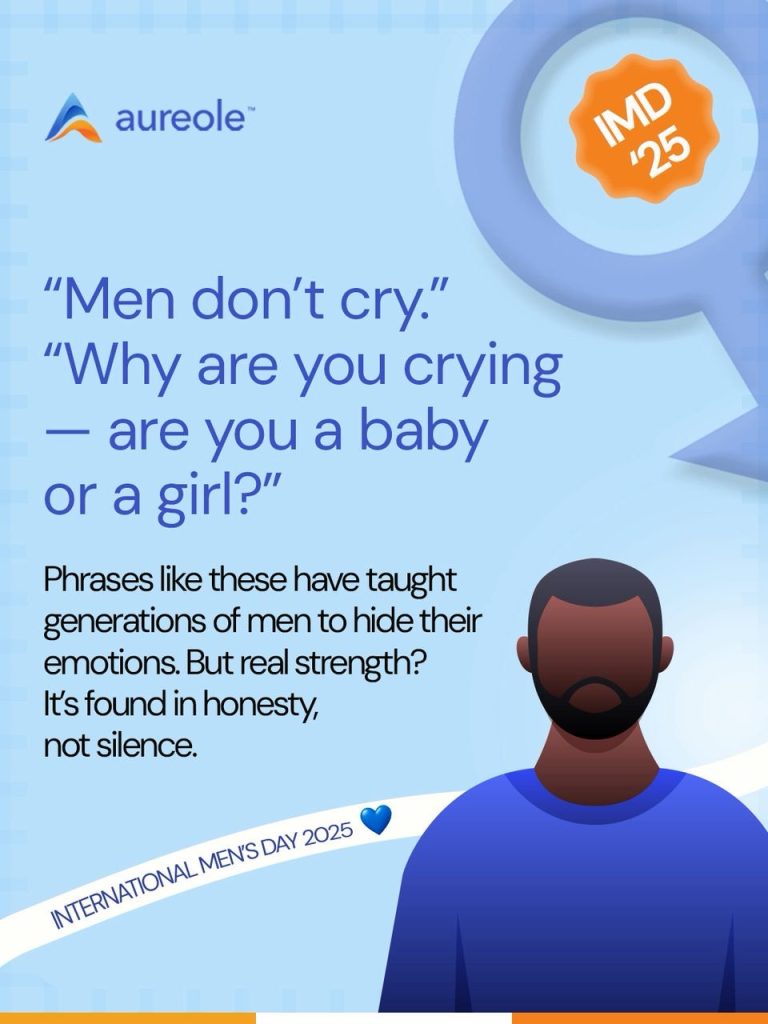
For many boys growing up, specific phrases echo through childhood:
“Men don’t cry.”
“Why are you crying? Are you a baby?”
“Are you a girl?”
These statements, and many more like them, repeated over generations, have shaped the way men are expected to behave. They have taught boys to suppress emotions, hide their pain, and bottle up their struggles. However, emotional expression is a human—not a gendered —trait. Crying is a natural response to hurt, fear, or sadness, and silencing boys early in life has had long-term effects on how society views masculinity.
This idea is just one of the many misconceptions about men and manhood that continue to exist today.
In celebration of International Men’s Day 2025, we asked men to share the most common misconceptions about men that they wish people would finally let go of.
Here’s what they had to say—unfiltered and in their own words.
Dayo
“The misconception about us is that people now assume men do a favour or try to assist the opposite gender just to get something in return. People have nailed so many men on this, and this is actually a wrong mindset in most cases.”
Kelechi
“That every man is inherently evil, most women believe men are evil, forgetting every human has the tendency to be evil.”
Philips
“Men also go through moments of doubt and uncertainty. We don’t always know the next step, and that’s okay.
Being a man doesn’t mean you must carry the world alone; it means you keep trying, keep growing, and keep standing, even when things don’t make sense.
Please give us room to fail, remove all those expectations at a certain age.”
Michael
“Men shouldn’t express their emotions and are measured by financial success.”
Jamal
“That we are superman, we are human, we fuck up, we have highs and lows. We have the right to cry as well.”
Why These Misconceptions Matter
These voices help highlight the emotional, social, and psychological weight men carry—often silently. The theme of International Men’s Day 2025 reminds us that supporting men means unlearning harmful stereotypes and allowing them the space to be human.
Masculinity is not a performance. It is not perfection or strength without vulnerability. It is the freedom to feel, to grow, to fail, to try again, and to be seen without judgment.
This year, let’s challenge the misconceptions and listen more closely to the men around us.